
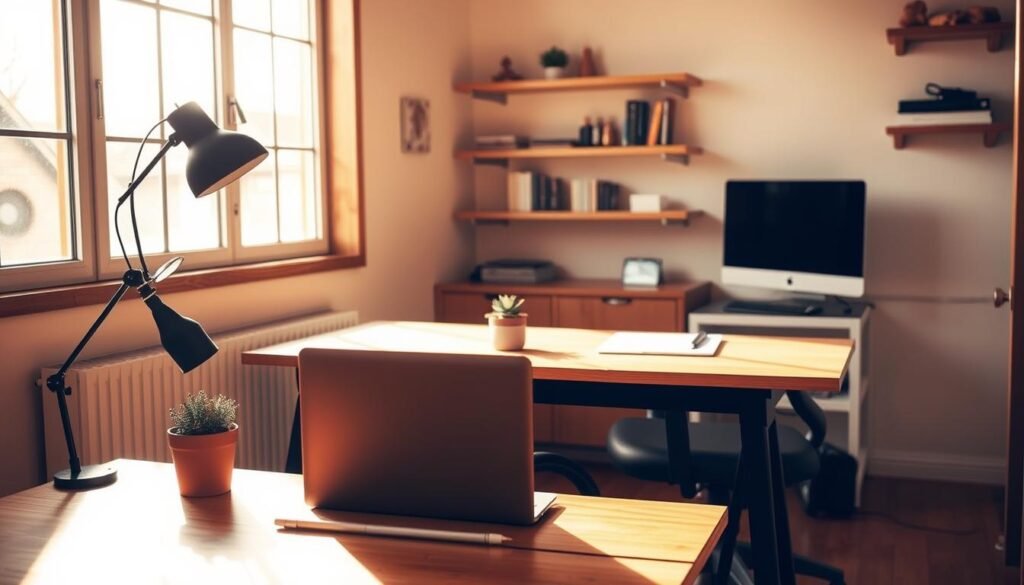
No spare room? No problem! You can turn even the smallest nook into a productive tiny home office space. The right strategies and tools are key. A well-organized and functional small home office boosts productivity and job satisfaction.
In a minimalist workspace, every inch matters. With the right solutions, you can create a haven of productivity and creativity.
Introduction to Tiny Home Office Space
Creating a tiny home office requires exploring space-saving hacks. Look into vertical storage ideas, wall-mounted desks, and foldable office solutions. These will help you make the most of your small home office.
With a little creativity, your tiny home office can become a space that boosts your productivity and job satisfaction.
Key Takeaways
- Maximize your tiny home office space with vertical storage ideas and wall-mounted desks.
- Invest in foldable office solutions to create a functional and flexible workspace.
- A well-organized and functional small home office can increase productivity and job satisfaction.
- Consider a minimalist workspace to make the most of your available space.
- Explore various space-saving hacks to create a haven of productivity and creativity in your tiny home office space.
- Make the most of your small home office by incorporating space-saving solutions and strategies.
Understanding the Challenges of a Tiny Home Office Space
Working in a small home office can be tough, but it’s doable. Most home offices are about 100 square feet, as the American Community Survey shows. To make a good workspace, you must know the common problems and what you really need to work well.
In a tiny office, every inch matters. You must use your space wisely to stay organized and focused. A good home office is more than just a desk and chair. It’s about creating a place that helps you work better and feel comfortable.
Common Space Constraints in Small Offices
Small offices often have limited floor space, no storage, and bad lighting. To beat these issues, use wall shelves, get a small desk, and let in natural light.
Identifying Your Essential Work Requirements
To make a useful workspace, figure out what you really need to do your job. List your daily tasks and the tools you use for them. This will show you what your small home office needs, like a comfy chair, a good computer, and a way to keep files.
Setting Realistic Space Goals
It’s key to set realistic goals for your home office space. Think about your budget, the space you have, and how you work. Use online tools or talk to a pro to design a tiny office that fits your needs and boosts your productivity.
Maximizing Vertical Space with Smart Storage Solutions
Every inch matters in a space-saving office setup. To make your workspace more efficient, think vertically. Use wall-mounted shelves, storage units, and file organizers to keep supplies and equipment organized and handy. This is crucial in a micro office, where space is limited.
Wall-mounted shelves are a great way to use vertical space. They can hold books, files, and other essentials, keeping them off the floor. Storage units like cabinets or drawers are also useful for larger items. Organizing your office supplies and equipment makes your workspace more productive and efficient.
Here are some ideas for using vertical space:
- Using stackable containers to store office supplies
- Installing a pegboard to hang tools and equipment
- Using a wall-mounted desk or workspace to free up floor space
Smart storage solutions can turn a small office into a productive space. Choose solutions that meet your needs and style. Don’t hesitate to get creative with your vertical space.
Wall-Mounted Desks: Your Space-Saving Workstation Solution
In a tiny home office, every inch is precious. That’s why wall-mounted desks are a hit. They save space, look great, and are easy to put up. A wall-mounted desk turns your space into a neat, stylish work area.
There are many types of wall-mounted desks out there. You can pick from simple fold-down desks to adjustable ones with shelves. Some even have built-in cable management to keep things tidy.
Here are some perks of using a wall-mounted desk in your tiny home office:
- Space-saving design
- Easy to install
- Stylish and modern look
- Customizable to fit your needs
Choosing a wall-mounted desk makes your small home office perfect. It’s designed to save space and looks modern. It’s ideal for anyone wanting to make the most of their tiny home office.
Foldable Furniture: Transform Your Space in Seconds
Creating a compact home office means using every inch wisely. Foldable furniture is a big help here. It can be set up and taken down quickly, making it great for rooms that serve multiple purposes. In a space that needs to be both efficient and versatile, foldable furniture is a top choice.
In a small office, it’s vital to use space well without losing functionality. Foldable items like desks, chairs, and tables can be tucked away when not needed. This makes the area feel bigger and less cluttered. It’s a big plus in tiny office designs, where space is at a premium. Adding foldable furniture to your office makes it both useful and adaptable.
Some benefits of foldable furniture include:
- Space-saving design
- Easy to set up and take down
- Perfect for multipurpose rooms or shared offices
When picking out foldable furniture for your small office, think about what you need. Look for items that are strong, simple to put together, and well-made. This way, you can make an office that works well and feels good, helping you stay productive in a small space.
Creating a Multi-Functional Tiny Home Office
To make a tiny home office, think outside the box. Use dual-purpose furniture and room dividers for a space-saving setup. This way, you can cut down on clutter and maximize your space.
Consider furniture that does more than one thing. For example, a desk with storage, a chair that’s also a file cabinet, or a bookshelf that divides rooms. These items help you create a space that serves many purposes. A storage ottoman can be a seat and a place to store things. A wall-mounted desk with a fold-down shelf can be a workspace that folds away when not needed.
Room dividers come in many forms, like screens, curtains, and shelves. They help separate your workspace from the rest of your home. Or, they can create a private area in your office. Adding a room divider to your decor gives you a sense of separation and defines different areas.
Dual-Purpose Furniture Ideas
- A desk with built-in storage
- A chair that doubles as a file cabinet
- A bookshelf that also serves as a room divider
Room Divider Strategies
- Using a screen to separate your workspace from the rest of your home
- Installing a curtain to create a private area within your office
- Using a shelf as a room divider to define different areas of your space
Smart Storage Solutions for Office Supplies
In a tiny home office, keeping things organized is key. Smart storage solutions help keep your space clutter-free and productive. Use storage bins, baskets, and file organizers to keep supplies in order and easy to find.
A tidy minimalist workspace boosts your productivity. Consider wall-mounted shelves or storage units to use your vertical space well. This keeps supplies organized and frees up floor space, making your office feel bigger.
Some smart storage ideas include:
- Using storage bins and baskets to keep office supplies organized and out of sight
- Implementing a file organizer system to keep important documents within reach
- Utilizing wall-mounted shelves or storage units to maximize vertical space
Adding these smart storage solutions to your tiny home office makes it more efficient and productive. Choose solutions that match your needs and style. Don’t hesitate to think outside the box with your storage ideas.
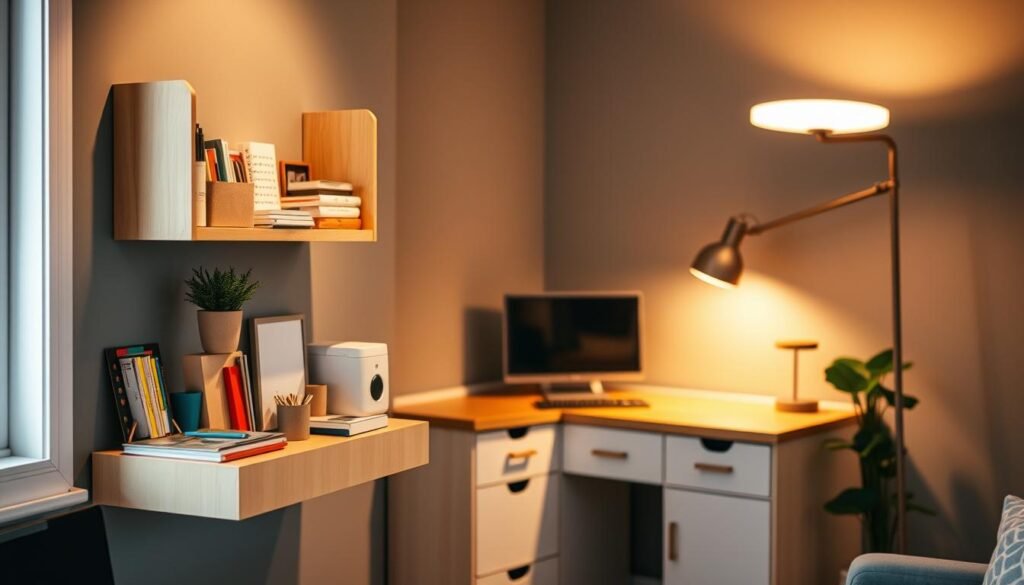
Lighting Techniques to Enhance Your Compact Workspace
Lighting is key in making your home office efficient. A well-lit space boosts productivity and comfort. Use natural light by placing your desk near a window or mirrors to reflect it. This makes your tiny office bright and welcoming.
For a space-saving approach, consider table lamps and floor lamps. They offer focused light without taking up much space. LED light strips or under-cabinet lighting can also add a modern touch to your home office.
Optimizing Lighting for Productivity
- Use task lighting to focus on specific areas, such as your desk or reading nook
- Install dimmer switches to adjust the lighting levels according to your needs
- Consider using smart light bulbs that can be controlled remotely
By using these lighting tips, you can make your home office both functional and cozy. Balance your lighting with colors and textures for a harmonious and productive space.
Digital Organization for Physical Space Reduction
Creating a space-saving office setup means looking at digital organization. It helps cut down physical space and clutter. Digital tools keep your office supplies and equipment organized and easy to find. This is especially helpful in a micro office decor, where space is limited.
Cloud storage, digital note-taking apps, and project management software are great for organizing. They let you store and access files, notes, and tasks online. For example, cloud services like Google Drive or Dropbox let you access files from any device with internet.
When picking digital tools for your office, think about a few things:
- Ease of use and navigation
- Compatibility with your devices and operating system
- Security and data protection features
- Scalability and flexibility to meet your growing needs
Using digital organization solutions makes your office more efficient and clutter-free. It helps you stay organized and productive. Make sure to check and update your digital tools often. This keeps them working well for your micro office decor goals.
Color and Design Tips for Small Office Spaces
Creating a productive tiny home office space starts with color and design. A well-designed office helps you stay focused and motivated. On the other hand, a poorly designed one can distract you and lower your productivity.
To improve your small office, use light colors and minimal decor. This creates a sense of space and calm. In a minimalist workspace, every detail matters, and the right colors can make a big difference.
Soft hues like beige, grey, and white reflect light and make your office feel bigger. Adding natural textures such as wood and plants brings warmth and depth to your space.
Here are some tips for choosing the right colors and decor for your small home office:
- Use a monochromatic color scheme for cohesion and calm
- Incorporate mirrors to reflect light and make your space seem larger
- Choose multi-functional furniture to save space and reduce clutter
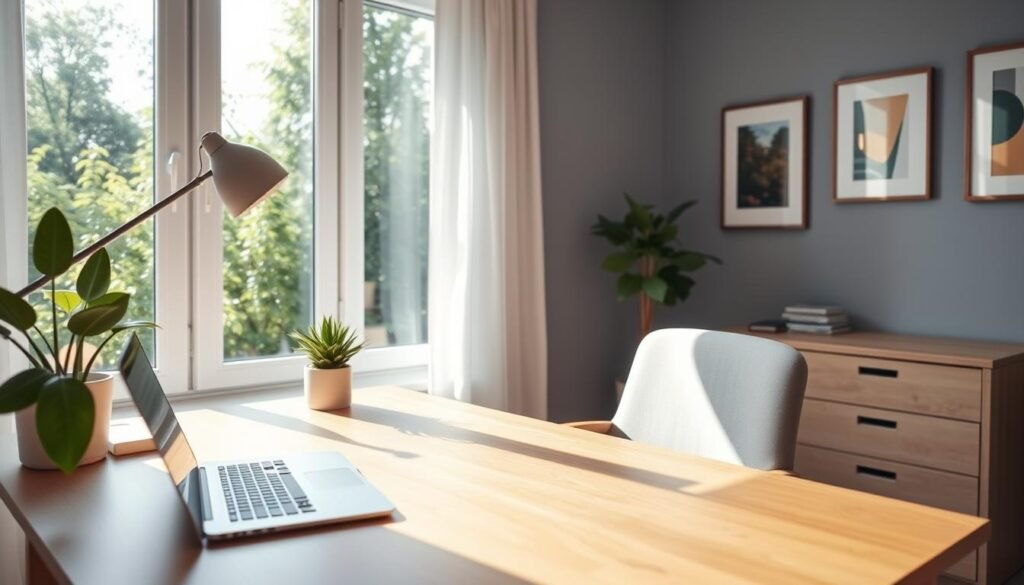
By following these tips, you can make a comfortable and productive small home office. Keep your design simple yet functional. Don’t hesitate to try different colors and textures to find the perfect fit for your tiny home office space.
Budget-Friendly Space Optimization Hacks
Creating an efficient home office doesn’t have to be expensive. With a bit of creativity, you can make your compact home office space better without spending a lot. Using DIY storage and upcycling old furniture is a great way to do this. It saves money, reduces waste, and lets you create a unique tiny office that shows your style.
DIY storage solutions offer endless options. You can use repurposed materials like old crates, baskets, or shelves for storage. For instance, an old ladder can become a bookshelf, or a vintage suitcase can hold your office supplies. These creative ideas help you use your space well and make your home office both useful and stylish.
- Use wall-mounted shelves to keep your desk clutter-free and create a sense of openness in your compact home office.
- Invest in a multifunctional desk that includes storage units, such as drawers or cabinets, to keep your office supplies organized.
- Utilize vertical space by installing floor-to-ceiling shelves or storage units that can hold books, files, and other office essentials.
By using these budget-friendly hacks, you can make a functional and efficient compact home office. It will meet your needs and stay within your budget.
Maintaining Organization in Your Micro Office
To keep your micro office tidy and boost productivity, organization is key. A well-organized space can help you stay focused and efficient. Try the “one touch” rule to handle each task once, cutting down on clutter.
Choosing a micro office decor that encourages organization is smart. Use shelves or drawers to keep important items handy. Regular cleaning sessions also help keep your space clutter-free and functional.
Here are more tips for keeping your micro office organized:
- Set aside a spot for paperwork and documents
- Use a desk organizer for pens and paper
- Have a filing system for easy access to important documents
By following these tips, you can make your micro office both functional and productive. This way, you can stay focused and efficient all day.
Conclusion: Creating Your Perfect Compact Workspace
By following the tips in this article, you can make your tiny home office both functional and beautiful. The secret is to use your space wisely. This means making the most of vertical space, choosing furniture that does more than one thing, and keeping things simple.
Think outside the box with creative storage and use wall-mounted desks to save space. Add furniture that can fold or serve two purposes. Don’t forget about lighting, colors, and how you organize things to make your space feel bigger. With a bit of creativity, your small office can become a place of both work and inspiration.
When you start to make your tiny home office better, remember what you really need to do. Set goals that are realistic for your space. By focusing on what works best for you, you can make a space that shows off your style and meets your work needs. Take on the challenge and see how much you can do with your small office.
